(801) 278-0840
How to Choose Between Composite and Porcelain Veneers for Your Smile?

By Cottonwood Dental | February 14, 2025
When you look in the mirror, how confident are you with your smile? If you’ve ever considered enhancing the look of your teeth, veneers may be the solution you’ve been looking for.
But when it comes to choosing between composite veneers and porcelain veneers, it can be tough to know which one’s right for you. Studies from the National Institutes of Health (NIH) show that veneers have a survival rate of 91% over 20 years.
The good news is, that understanding the unique benefits of each option can help you make the best choice. Let’s dive in and explore what makes composite veneers and porcelain veneers different, so you can find the perfect fit for your smile makeover.
What Are Composite and Porcelain Veneers?
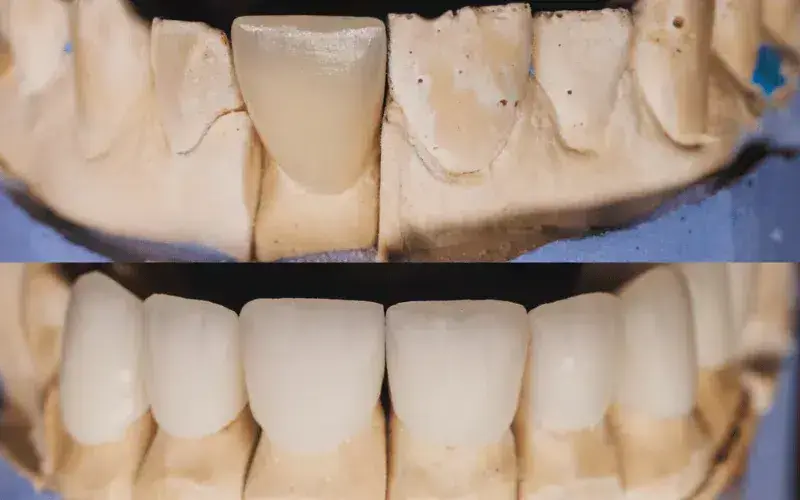
Both composite veneers and porcelain veneers are thin layers that cover the front of your teeth, hiding imperfections and giving you a smooth, uniform smile.
They’re an excellent solution if you have issues like discoloration, gaps, or uneven teeth.
- Composite Veneers:
Made from a durable, tooth-colored resin, composite veneers are applied directly to the surface of your teeth.
Your dentist will shape and mold the resin to achieve the desired look, and the process typically takes just one visit.
- Porcelain Veneers:
Crafted from high-quality ceramic material, porcelain veneers are custom-made in a dental lab.
They require two visits: one to take impressions and another to place the veneers once they’re ready.
Key Differences Between Composite and Porcelain Veneers
So, what’s the real difference between composite veneers and porcelain veneers? Here’s a breakdown of what each option offers:
1. How Long They Last
Porcelain veneers are built to last. They typically stay in great shape for about 10-15 years with proper care. They also resist staining, meaning they’ll maintain that white, bright look for a long time.
In comparison, composite veneers usually last around 5-7 years. They’re still durable but may need a bit more care, as they’re more prone to staining and chipping over time.
2. How Natural They Look
When it comes to looks, porcelain veneers shine. They mimic the light-reflecting properties of natural teeth, making them look incredibly realistic. If you want a smile that blends seamlessly with the rest of your teeth, porcelain veneers are the way to go.
Composite veneers can look great too, but they don’t offer the same level of translucency as porcelain. They might not blend as naturally, and they can discolor more quickly, especially if you drink coffee or wine.
3. The Procedure
One of the reasons people love composite veneers is that the procedure is fast. Your dentist can apply the composite directly to your teeth and shape it to your desired look, all in a single visit.
With porcelain veneers, the process takes a little longer. Your dentist will take impressions of your teeth during the first visit, and after your custom veneers are made in a lab (usually taking a couple of weeks), you’ll return to have them placed.
4. Maintenance and Care
Both types of veneers need good oral hygiene, like brushing and flossing. But porcelain veneers are easier to maintain long-term. They resist stains and are more durable, so they’ll stay looking great with minimal upkeep.
Composite veneers might need occasional touch-ups or repairs. If you grind your teeth at night or eat hard foods, you’ll need to be more cautious with composite veneers, as they’re more prone to damage than porcelain.
Which One Is Right for You?
Choosing between composite veneers and porcelain veneers depends on what you’re looking for.
- Go for Composite Veneers if:
- You want a more budget-friendly, quicker solution
- You’re looking for a non-invasive treatment with less enamel removal
- You’re okay with replacing them in a few years
- Go for Porcelain Veneers if:
- You’re willing to invest in a long-term solution
- You want a natural, lifelike look that lasts longer
- You don’t mind waiting a few weeks for custom-made veneers
Conclusion
In conclusion, both composite veneers and porcelain veneers offer unique benefits to enhance the appearance of your smile. Composite veneers provide a quicker and less invasive solution, making them a great option for those looking for immediate results.
On the other hand, porcelain veneers offer superior durability, a more natural look, and better stain resistance, making them a lasting choice for a long-term smile transformation. The right choice depends on your specific goals, preferences, and the look you wish to achieve.
Consult with a Cosmetic Dentist in Salt Lake City, UT
Deciding between composite veneers and porcelain veneers can be tricky, but a consultation with a skilled cosmetic dentist in Salt Lake City can help you make the best decision to choose the right veneers. They can evaluate your teeth and provide recommendations based on your goals, lifestyle, and budget.
Call us today at (801) 849-3319 to schedule your consultation and learn which option is right for you.
At Cottonwood Dental, we specialize in helping patients achieve the smile they’ve always wanted, whether with composite veneers or porcelain veneers. Learn more about our services for veneers today!
FAQs About Composite and Porcelain Veneers
Here are some common questions people often ask when deciding between composite veneers and porcelain veneers:
1. How do I know if I need veneers?
Veneers are perfect for issues like stained, chipped, or uneven teeth. A consultation with a cosmetic dentist will help you determine if veneers are the right option for you.
2. Will veneers damage my teeth?
No, veneers do not damage your natural teeth. They can help protect your teeth from further damage. However, some enamel may be removed to ensure a proper fit, especially with porcelain veneers.
3. How long does the veneer procedure take?
For composite veneers, the process can usually be completed in a single visit. Porcelain veneers take longer because they’re custom-made in a lab, so you’ll need at least two visits—one to take impressions and one to place the veneers.
4. Are there any risks with veneers?
Both types of veneers are generally safe, but there are risks like tooth sensitivity, especially after the procedure. Your dentist will guide you through any risks.
5. How do I care for my veneers?
To keep your veneers in good shape, brush, and floss regularly, just like natural teeth. Avoid habits like chewing hard objects or grinding your teeth, and schedule regular dental check-ups to maintain their appearance and longevity.